
Hair Transplant Recovery Timeline: Shedding to New Growth
A timeline for washing, stitches, temporary shedding, return to activity and early new growth after hair transplantation.
Hair Transplant Recovery Timeline
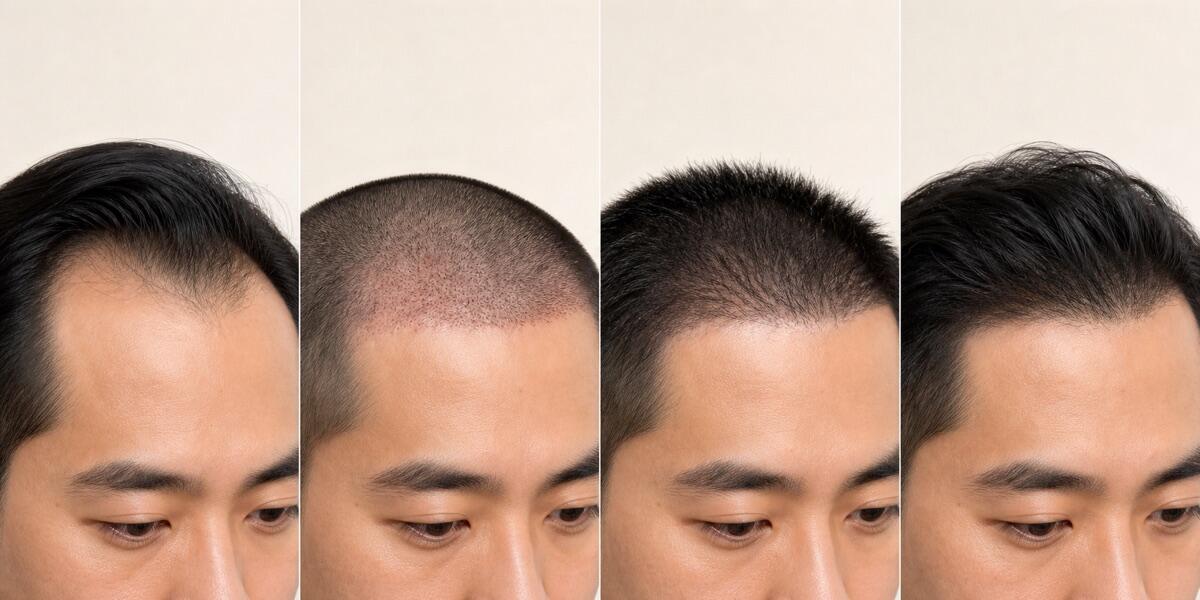
After hair transplant surgery, gentle washing may be allowed within days and stitches, when used, may be removed around one week to 10 days. Transplanted hairs can shed within about six weeks; this is commonly temporary, with growth resuming later. The surgeon’s technique-specific plan remains the deciding instruction.
Timeline at a glance
Temporary shedding can make an early transplant look as though it has failed. Recovery of the scalp and visible growth follow different timelines.
Protected grafts
Bandages, if used, may be removed early and gentle washing may be permitted according to the surgeon’s method.
Incision review
Stitches may be removed in this window when the chosen technique uses them.
Temporary shedding
Many transplanted hairs can fall out. This is expected in common recovery descriptions and is usually temporary.
Growth becomes gradual
Hair growth resumes gradually and is judged over months rather than days. Additional procedures may be discussed later.
The bars show relative visibility within this guide only. They are not percentages, clinical measurements or personal forecasts.
Why transplanted hairs can shed before growing
Hair transplantation relocates follicles from a donor area into prepared recipient sites. The visible hair shaft may shed during recovery even when the transplanted follicle remains capable of entering a new growth cycle.
The donor technique, graft handling, recipient density and underlying cause of hair loss influence both the short recovery and the longer cosmetic result. Progress is judged across months, not by whether every early hair remains visible.
Deeper visual interpretation
The visible recovery and the growth cycle run on different clocks. A calm-looking scalp does not mean new hairs should already be visible, and early shedding does not by itself prove that transplanted follicles were lost.
| Observation | Possible context | What improves interpretation |
|---|---|---|
| Crusting or redness | Early recipient-site healing | Technique-specific washing instructions and serial photos |
| Short hairs shedding | A recognized early phase in many recovery guides | The clinic’s expected window and later growth reviews |
| Patchy early growth | Follicles do not all enter visible growth together | Monthly—not daily—photos under fixed conditions |
| Increasing pain, drainage or spreading redness | Not a hair-growth milestone | Prompt assessment by the treating team |
Build a useful monthly record
- Use dry, product-free hair
Fibers, concealer and wet hair can radically alter apparent density.
- Fix the part and camera height
Photograph the frontal hairline, both temples and the top view from repeatable angles.
- Save the month, not the mood
Daily checking amplifies normal lighting and styling noise; monthly intervals better match the growth clock.
How to interpret the stages
A recovery timeline combines broad observations from published patient guidance. It cannot know the exact product or device, treatment depth, technique, medical history, skin characteristics or aftercare plan involved in one person’s case.
Use the stages to understand the order in which changes may happen and to prepare questions for a qualified professional. Do not use a general internet timeline to override instructions from the clinician who assessed and treated you.
Aftercare principles
- Use only the washing method and products approved by the surgical team.
- Avoid vigorous exercise and contact sports for the prescribed period.
- Do not scratch, pick or dislodge crusts around grafts.
- Attend follow-ups so the donor and recipient sites can be assessed.
Contact the surgeon for uncontrolled bleeding, fever, pus, rapidly worsening redness or swelling, severe pain or concerns that grafts or incisions have been disrupted.
Why your timeline may differ
Questions to ask before treatment
- Which donor and implantation technique will be used?
- Who performs extraction, site creation and graft placement?
- How will existing hair loss be assessed and managed long term?
Hair-transplant teams and permitted technician roles vary widely by jurisdiction. Verify who performs each surgical step and what follow-up is available after returning home from international treatment.
Find official checks for 12 marketsHow this guide was made
2 named sources support the main claims. Each link explains how it was used, with public agencies, professional bodies or primary research preferred.
AI may assist with research organization, drafting and translation, but it is not treated as a source or credential. Read the editorial standards.
Stage bars organize a relative sequence. Original editorial illustrations are conceptual and are not clinical measurements, outcome percentages or personal forecasts.
This version has editorial evidence review, not medical review attributed to a named clinician. It does not replace an individual assessment. Editorial accountability.
Sources
- American Society of Plastic Surgeons: Hair Transplant Recovery
Washing, stitches, activity restrictions, temporary shedding and early regrowth.
- Cleveland Clinic: Hair Replacement Surgery
Procedure types, recovery and follow-up context.
Frequently asked questions
What should I know about Hair Transplant Recovery Timeline?
After hair transplant surgery, gentle washing may be allowed within days and stitches, when used, may be removed around one week to 10 days. Transplanted hairs can shed within about six weeks; this is commonly temporary, with growth resuming later. The surgeon’s technique-specific plan remains the deciding instruction.
Why can the timeline differ from person to person?
Treatment type, depth, technique, anatomy, skin and tissue response, health history, medication, aftercare and complications can all change timing. The treating professional’s instructions take priority over a general guide.
When should I contact a professional?
Contact the surgeon for uncontrolled bleeding, fever, pus, rapidly worsening redness or swelling, severe pain or concerns that grafts or incisions have been disrupted.
Compare the full cost of two clinic quotes
Enter only the graft count and fees written by each clinic, then compare treatment, aftercare, travel and time-away costs in one currency.
Open the hair transplant cost calculatorCompare this recovery time
See this treatment beside 10 other skincare, injectable, surgical, body and hair timelines without treating the ranges as personal clearance dates.
Open the 11-treatment comparisonRelated beauty guides
View Hair & RemovalLaser Hair Removal Aftercare and Results Timeline
Laser hair removal aftercare for redness, swelling, sun exposure, skin-tone safety and results across multiple sessions.
Read next HAIRHow Many Laser Hair Removal Sessions Do You Need?
Why laser hair removal may take 2–8 or more sessions, how intervals vary and when reduction or maintenance may be assessed.
Read next HAIRMounjaro Hair Loss: Evidence, Shedding Timeline and What to Check
What current Mounjaro and tirzepatide labels say about hair loss, how shedding differs from other patterns, and what to document before treatment decisions.
Read nextThis guide is for general education only. It is not medical advice, diagnosis, a treatment recommendation or a prediction of individual results. BeautiNext is not a clinic. Seek care from an appropriately qualified professional.