
Lip Filler Swelling Stages: Day 1 to Week 4
A stage-by-stage guide to lip filler swelling, bruising, settling time, aftercare and warning signs.
Explore this procedure in 3D
Turn the face, compare before treatment and move through the illustrative recovery stages for the selected region.
Compare recovery stages
Drag sideways to rotate · Pinch or scroll to zoom
Comparison, camera & procedure details
Two stages shown at the same angle and scale.
What changes in this example · 14 days after
Early days are spaced out so you can follow the visible changes.
- Fuller lip contour
- More swelling
A follow-up around two weeks can assess the individual result.
Product, injection technique, amount and individual response can change the appearance and timing. Face shape does not determine filler behavior.
Example contour
The upper and lower lip surfaces gain illustrative volume. Temporary swelling adds fullness around the lips before the later contour becomes visible.
Treatment date · Elapsed time
14 days after treatmentIllustrated range: 0–30 days
Customize display faceFemale · European / North American · Skin tone 4
Appearance settings only. Every face follows the same example recovery course.
Recovery at a glance
Lip filler
Compare added lip volume from the first hour with the temporary swelling that changes afterward.
A general recovery example based on public medical guidance. Timing and visible changes vary from person to person.
A later illustration shows an example contour, not how much filler you need or how long your result will last.
Filler materials are not interchangeable
HA is a water-binding gel. CaHA contains mineral particles in gel. PLLA produces a gradually apparent response, while PMMA particles are non-absorbable.
These previews illustrate selected volume responses, not every product, dilution or skin booster. The source describes US product and treatment-area evaluations; it is not a global approval list.
Sources & how this preview works
Public medical guidance informs the stage descriptions. The 3D swelling, color and contour changes are drawn examples, not patient measurements or a prediction of your result.
- Cleveland Clinic · Lip fillers
Early swelling and a follow-up around two weeks.
- AAD · Fillers: FAQs
Immediate-volume fillers versus gradual PLLA onset and temporary injection reactions.
- Cleveland Clinic · Bruise color changes
Explains complexion-dependent bruise colors and possible lighter brown, green or yellow as they fade. Color alone does not determine the recovery day.
Sources checked .
Read the complete recovery guideLip Filler Swelling Stages
Swelling is common after lip filler and often improves after 24 to 48 hours, though it can take up to a week and the final settling process may take two to four weeks. Severe pain, pale skin or purple discoloration requires urgent contact with the treating provider.
Timeline at a glance
The early appearance is a mixture of filler volume and tissue response. That is why the first mirror check is not the final result.
Early swelling
Tenderness, redness, bruising and swelling may be visible as the anesthetic wears off.
Often still prominent
Swelling commonly remains visible. Follow the exact instructions from the treating clinician.
Usually easing
Initial swelling generally continues to settle, although bruising or asymmetry can remain temporarily.
Later settling
The filler and surrounding tissue may take longer to reach a more stable appearance.
The bars show relative visibility within this guide only. They are not percentages, clinical measurements or personal forecasts.
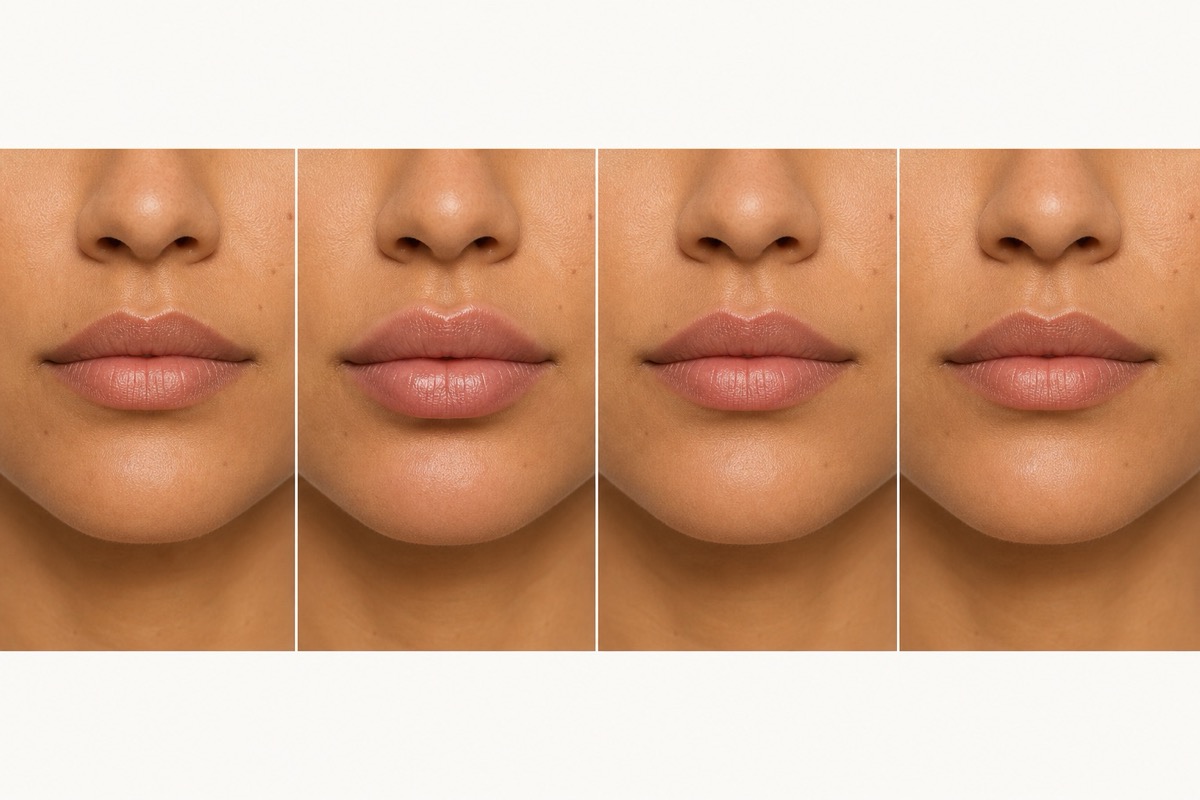
Why early lip volume is not the settled result
The first visible volume combines the injected material with a local tissue response from multiple needle passes. Swelling and bruising can temporarily exaggerate projection or make one side appear different from the other.
As that short-term response eases, the outline becomes easier to assess. The final review should consider the exact filler, amount, injection plane and whether the clinician expects a follow-up rather than treating every early irregularity as permanent.
Deeper visual interpretation
The useful question is not simply ‘Is it swollen?’ but ‘What is the pattern, direction and symptom combination?’ Early bilateral puffiness that gradually eases is a different pattern from escalating one-sided pain with color change.
| Pattern | More typical context | Action |
|---|---|---|
| Soft swelling on both sides | Often most visible during the first 24–48 hours | Follow the injector’s written aftercare and monitor the direction of change |
| Bruising without escalating pain | Can change color as it resolves | Ask the treating clinic if the pattern or duration is unexpected |
| Severe or increasing pain with pale, gray or purple skin | Not a normal settling milestone | Contact the treating professional immediately and seek urgent care as directed |
| Increasing heat, spreading redness, discharge or fever | Can be compatible with infection | Request prompt medical assessment |
A comparison photo that is actually useful
- Fix the conditions
Use the same room, light direction, camera distance and neutral expression.
- Capture three angles
Front, left three-quarter and right three-quarter views reveal different kinds of asymmetry.
- Record symptoms separately
A photograph cannot capture pain, warmth, numbness or visual symptoms; write those down with the time.
- Compare direction, not perfection
Ask whether swelling is broadly easing. Do not wait for a scheduled photo if urgent warning signs appear.
How to interpret the stages
A recovery timeline combines broad observations from published patient guidance. It cannot know the exact product or device, treatment depth, technique, medical history, skin characteristics or aftercare plan involved in one person’s case.
Use the stages to understand the order in which changes may happen and to prepare questions for a qualified professional. Do not use a general internet timeline to override instructions from the clinician who assessed and treated you.
Aftercare principles
- Use a wrapped cool pack for short periods if your clinician recommends it.
- Avoid vigorous exercise for the period advised by your provider.
- Do not massage or manipulate treated areas unless specifically instructed.
- Plan adequate recovery time before an important event.
Contact the treating provider immediately for extreme pain, paleness, purple discoloration, rapidly worsening swelling or other concerning symptoms.
Why your timeline may differ
Questions to ask before treatment
- What exact filler and amount will be used?
- Which symptoms require same-day contact?
- When does this clinic schedule its normal result review?
Filler brands, approval status and injector qualifications differ by country. Verify the product through the relevant national regulator and confirm that the practitioner is licensed for the procedure where it is performed.
Find official checks for 12 marketsHow this guide was made
2 named sources support the main claims. Each link explains how it was used, with public agencies, professional bodies or primary research preferred.
AI may assist with research organization, drafting and translation, but it is not treated as a source or credential. Read the editorial standards.
Stage bars organize a relative sequence. Original editorial illustrations are conceptual and are not clinical measurements, outcome percentages or personal forecasts.
This version has editorial evidence review, not medical review attributed to a named clinician. It does not replace an individual assessment. Editorial accountability.
Sources
- Cleveland Clinic: Lip Fillers
Recovery timing, common effects and aftercare overview.
- Cleveland Clinic: Lip Filler Aftercare
Settling time, practical care and vascular warning signs.
Frequently asked questions
What should I know about Lip Filler Swelling Stages?
Swelling is common after lip filler and often improves after 24 to 48 hours, though it can take up to a week and the final settling process may take two to four weeks. Severe pain, pale skin or purple discoloration requires urgent contact with the treating provider.
Why can the timeline differ from person to person?
Treatment type, depth, technique, anatomy, skin and tissue response, health history, medication, aftercare and complications can all change timing. The treating professional’s instructions take priority over a general guide.
When should I contact a professional?
Contact the treating provider immediately for extreme pain, paleness, purple discoloration, rapidly worsening swelling or other concerning symptoms.
Explore the complete lip filler guide
Move between swelling, aftercare, duration, product checks and urgent warning signs without mixing their timelines.
Open lip filler topic hubCompare this recovery time
See this treatment beside 10 other skincare, injectable, surgical, body and hair timelines without treating the ranges as personal clearance dates.
Open the 11-treatment comparisonRelated beauty guides
View Aesthetic ProceduresHow Long Do Lip Fillers Last? A 6-to-18-Month Timeline
How long lip filler can last, why reputable sources cite different ranges, what affects fading and why a calendar cannot predict retreatment.
Read next AESTHETIC PROCEDURESLip Filler Aftercare: Eating, Exercise, Makeup and Massage
What to do after lip filler, when to eat, exercise, use lip products or massage—and why reputable aftercare instructions can differ.
Read next AESTHETIC PROCEDURESLip Flip vs Lip Filler: Differences, Results, Duration and Risks
Compare how a lip flip and lip filler work, when results appear, how long they may last and why their risks and tradeoffs are different.
Read nextThis guide is for general education only. It is not medical advice, diagnosis, a treatment recommendation or a prediction of individual results. BeautiNext is not a clinic. Seek care from an appropriately qualified professional.