
Acne Scar Guide: Types, Treatments, Microneedling and Peels
A sourced acne scar guide connecting scar types, active acne, microneedling, chemical peels, skin tone, downtime, risks and consultation questions.
Start with the scar—or confirm that it is a scar
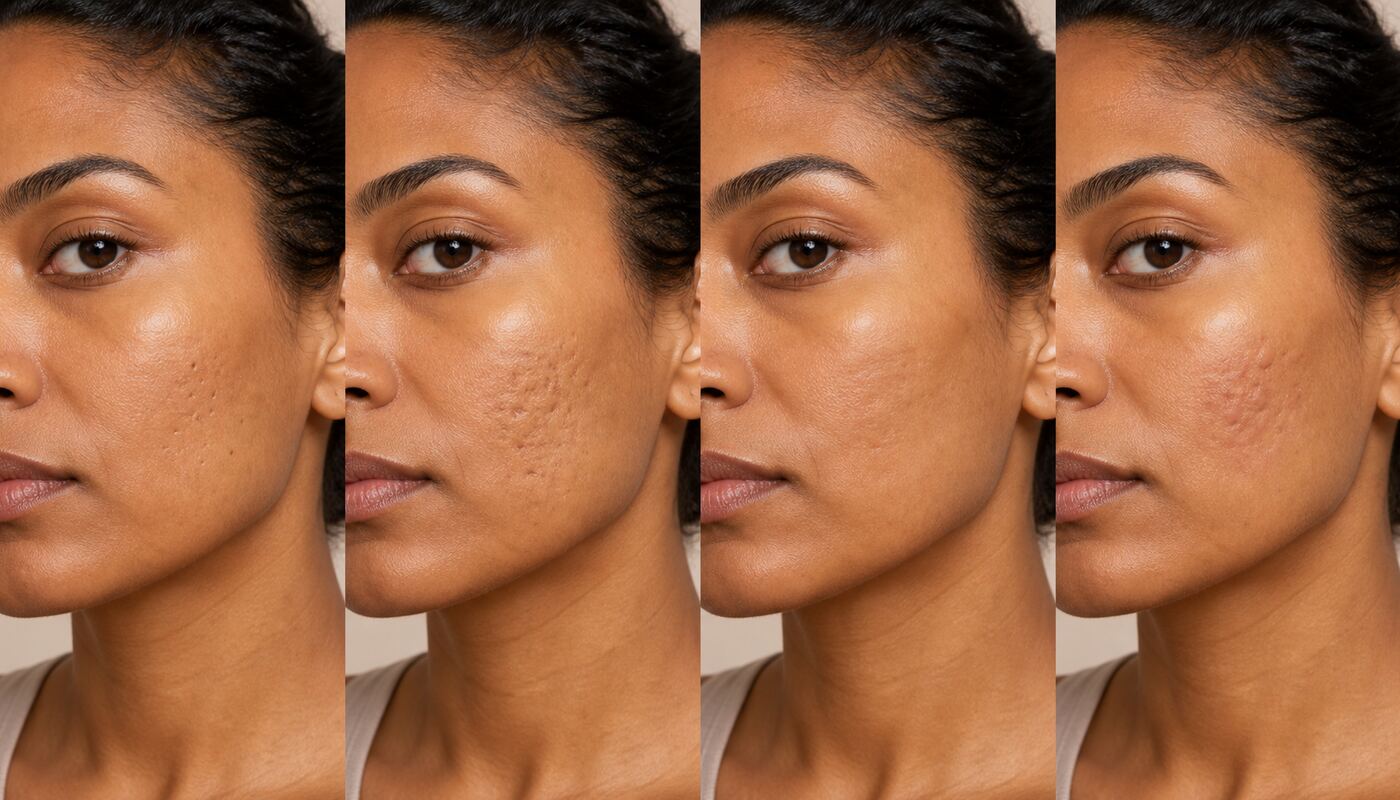
A flat red, brown or lighter post-acne mark is not the same finding as a depressed or raised scar. Control active acne, identify the scar pattern and record pigment or keloid history before comparing microneedling, peels, laser, fillers, scar surgery or a combination plan.
A decision sequence before treatment
The useful timeline begins before a procedure is booked. Each step changes which comparison is relevant next.
Control active acne
New breakouts can create new marks or scars. Ask whether acne treatment should come before or alongside scar planning.
Separate mark from scar
Flat discoloration and changes in skin contour are different findings, even when they appear in the same area.
Map the patterns
Ice-pick, rolling, boxcar and raised scars can coexist. Depth, edges, tethering and location all matter.
Compare exact procedures
Ask about the exact device, peel agent and depth, treatment area, operator, downtime, risks and follow-up plan.
The bars are a visual comparison within this guide; they are not percentages or personal forecasts.
The finding changes the treatment question
This table organizes consultation questions. It does not match a photo to a diagnosis or prescribe a procedure.
| Finding to clarify | First question | Options a dermatologist may discuss |
|---|---|---|
| Flat post-acne color | Is this pigment or vascular color rather than a scar? | Acne control, sun protection and a finding-specific color plan |
| Narrow, deep depression | Does it resemble an ice-pick pattern? | Targeted techniques, resurfacing or a combination plan |
| Broad, wave-like depression | Is tethering contributing to a rolling pattern? | Release techniques, resurfacing, microneedling or combinations |
| Round or oval depression | How deep and sharply edged is the boxcar pattern? | Resurfacing, microneedling, targeted procedures or combinations |
| Firm or growing raised area | Is this hypertrophic scarring, a keloid or another condition? | A diagnosis-led plan that may include injections, laser or surgery |
Choose the guide that matches your next question
Acne Scar Treatment Comparison
Compare common treatment families by the finding they target, downtime, limitations and questions to ask.
Compare treatment families COMPARISON · NEEDLES VS ACIDMicroneedling vs Chemical Peel
Separate mechanism, scar or pigment goals, skin-tone context, downtime and procedure-specific risks.
Compare the procedures AFTERCARE · FIRST 24 HOURS TO WEEK 1Microneedling Aftercare Timeline
Review early visible response, makeup timing, device and cartridge checks, aftercare and warning signs.
Open aftercare timeline ABLATIVE LASER · DAY 0 TO MONTH 6+CO2 Laser Recovery Timeline
Separate wound care, surface closure, social downtime and longer color change across fractional and fully ablative plans.
Open CO2 recovery COST · TWO QUOTES · 12 CURRENCIESCO2 Laser Cost Calculator
Compare written session or package prices with excluded anesthesia, facility, aftercare, travel and time-away costs.
Compare two quotes 3D TIMELINE · DAY 0 TO WEEK 4Chemical Peel Recovery Timeline
Explore an illustrative rotatable timeline while keeping peel depth, agent and personal recovery separate.
Open the 3D timelineBring these five checks to a consultation
- Ask whether each visible area is active acne, a flat mark, a depressed scar, a raised scar or another condition.
- Record prior pigment changes, keloids, medication, skin conditions and recent procedures.
- Request the exact device or peel agent, depth or settings, operator credentials and patient information.
- Ask how the plan changes for your skin tone, scar mix, downtime limit and travel or follow-up needs.
- Use consistent, unfiltered photographs and predefined review dates instead of judging day-to-day lighting changes.
Device authorization, peel-product rules and who may perform a procedure differ by country. Verify the exact product, device, practitioner and facility where treatment takes place.
Check official registers in 12 marketsDo not use high-concentration chemical peel products or skin-penetrating microneedling devices without appropriate professional supervision. Seek prompt medical advice for severe or worsening pain, blistering, spreading redness, pus, fever, vision changes, rapidly changing pigment or another concerning symptom.
How this guide was made
6 named sources support the main claims. Each link explains how it was used, with public agencies, professional bodies or primary research preferred.
AI may assist with research organization, drafting and translation, but it is not treated as a source or credential. Read the editorial standards.
The hub connects focused guides and organizes decision points. Its stage bars are navigation aids—not clinical scores, measured outcomes or treatment rankings.
This version has editorial evidence review, not medical review attributed to a named clinician. It does not replace an individual assessment. Editorial accountability.
Sources and scope
The AAD pages support the scar-type and consultation framework. FDA pages add U.S. device and product warnings; authorization and professional scope differ internationally.
- American Academy of Dermatology: Acne scars—signs and symptoms
Defines depressed, raised and flat post-acne findings, including ice-pick, rolling and boxcar patterns.
- American Academy of Dermatology: Acne scars—consultation and treatment
Explains why acne control, scar type, skin tone, goals and combination treatment can affect planning.
- American Academy of Dermatology: Microneedling
Patient guidance on microneedling uses, visible response and treatment course.
- American Academy of Dermatology: Chemical peels—FAQs
Patient guidance on peel depth, healing ranges, preparation and aftercare.
- FDA: Microneedling devices
U.S. device scope, risks, cartridge safety and limits on delivering products through microneedling devices.
- FDA warning: Chemical peel products without professional supervision
U.S. warning about certain high-concentration at-home chemical peel products.
Acne scar questions
Are post-acne dark or red marks acne scars?
Not necessarily. The AAD distinguishes flat post-inflammatory color changes from scars that alter skin contour. A person can have both, so confirm the finding before comparing treatment claims.
What is the best acne scar treatment?
There is no single best procedure for every scar. Active acne, scar pattern, skin tone, pigment or keloid history, downtime, risk tolerance and operator expertise can change the plan; combination treatment is common.
Is microneedling better than a chemical peel?
They do not answer the same question in every case. Compare the exact scar or pigment target, device or peel depth, expected recovery, evidence for your skin tone and the professional’s plan—not the treatment names alone.
This hub provides general education, not medical advice, diagnosis, a treatment recommendation or a personal result forecast. BeautiNext is not a clinic.