
Microneedling vs Chemical Peel: Scars, Pigmentation, Downtime and Risks
Compare microneedling and chemical peels for acne scars, pigmentation, skin tone, downtime, treatment series, procedure-specific risks and questions to ask.
Microneedling vs Chemical Peel
Neither microneedling nor a chemical peel is universally better. Microneedling creates controlled punctures intended to stimulate collagen, while a chemical peel removes skin layers to a selected depth using an acid solution. The useful choice starts with the diagnosed concern, exact device or peel, skin tone, pigment history, downtime and professional experience—not the treatment name alone.
A treatment comparison at a glance
A light glycolic peel, a medium TCA peel, mechanical microneedling and radiofrequency microneedling are not four versions of one procedure. Identify the exact treatment before comparing recovery, risk or likely benefit.
Name the concern
Separate active acne, flat post-acne color, melasma, rough surface texture and true depressed or raised scars. One photograph cannot diagnose which structure needs treatment.
Identify the exact procedure
For needling, record the device, mechanical or radiofrequency method, depth, cartridge and added products. For a peel, record the agent, concentration, intended depth and application time.
Compare recovery clocks
AAD guidance describes common microneedling reactions resolving in a few days to a week. Chemical-peel healing ranges from about one to seven days for a light peel to 14 to 21 days for a deep peel.
Check skin-tone and safety experience
Both procedures can cause pigment change, infection or scarring. Ask how the provider adjusts selection and aftercare for your skin tone, history and local regulatory context.
The bars organize decision priority. They are not treatment scores, clinical measurements, suitability ratings or result forecasts.
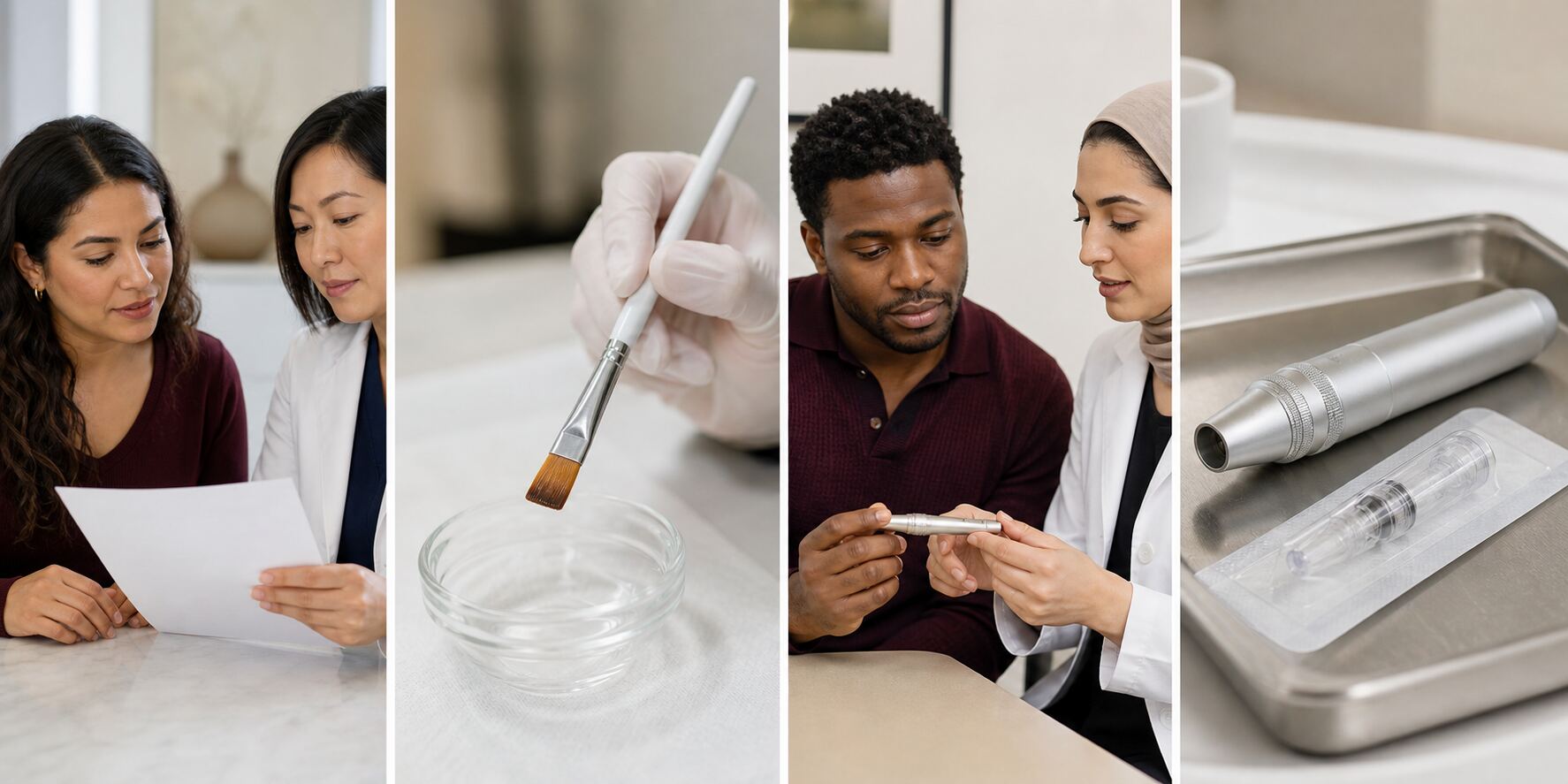
Controlled puncture and controlled exfoliation are different mechanisms
Mechanical microneedling uses sterile needles to create controlled channels in living skin and stimulate a repair response. Radiofrequency microneedling adds thermal energy and needs its own device-specific risk discussion; it should not be treated as identical to mechanical needling.
A chemical peel applies an acid solution that removes skin to a selected depth. Agent, concentration, number of layers or applications, contact time and skin response change penetration. The label chemical peel therefore spans a much wider recovery range than one light-peel example.
Neither mechanism selects itself from a selfie. Flat pigment, active acne, depressed scars, raised scars, melasma and rough texture can overlap visually while requiring different priorities, combinations or no procedure at all.
Deeper visual interpretation
The comparison becomes useful only after the word peel is replaced by an agent and depth, and microneedling is replaced by a device and method. Otherwise a light surface treatment may be compared with a deeper device procedure as though the names describe fixed doses.
| Question | Microneedling | Chemical peel |
|---|---|---|
| Core action | Sterile needles create controlled channels intended to trigger repair and collagen production | An acid solution removes skin to a selected depth |
| Variables to record | Device, mechanical or RF method, needle depth, passes, cartridge, area and added products | Agent, concentration, layers or applications, contact time, neutralization and intended depth |
| Commonly discussed concerns | Depressed acne scars, texture, pores, some pigment concerns and wrinkles | Some acne, discoloration, melasma, rough texture, fine lines and sun damage |
| Published visible recovery | AAD: reactions usually resolve in a few days to a week; wait 24 hours before makeup | AAD: about 1–7 days light, 7–14 days medium and 14–21 days deep |
| Result clock | Gradual collagen response, often across a series | Visible after healing; light peels may also be performed as a series |
| Finding or goal | Question it raises | What it does not decide |
|---|---|---|
| Flat brown or gray mark after acne | Is this post-inflammatory pigment rather than a structural scar? | That a deeper procedure will clear it faster or more safely |
| Indented texture | What scar type and depth are present, and are tethering or mixed scars involved? | That all depressions respond to one microneedling depth or peel |
| Active acne | Should breakouts be controlled before a scar procedure, and can the planned peel treat this acne type? | That needling inflamed lesions is appropriate |
| Melasma or pigment-prone skin | What is the diagnosis, trigger plan and risk of post-inflammatory pigment change? | That either procedure prevents recurrence |
| Short downtime | Which exact depth and aftercare determine social and skin-barrier recovery? | That every peel has longer downtime than every needling procedure |
Make two consultations comparable
- Get a diagnosis before a package
Ask the professional to separate active acne, flat pigment, scar type, texture and another skin condition before naming the procedure.
- Write down the treatment identity
Capture the exact device or peel agent, depth, planned area, session count, interval and any combined product.
- Compare two recovery clocks
Record both visible downtime and the later result-review date. A calm surface does not mean collagen remodeling or pigment behavior is final.
- Compare the complication pathway
Ask who evaluates burns, infection, herpes, pigment change or scarring, especially after travel or treatment in another jurisdiction.
How to interpret the comparison
This comparison organizes diagnosis, procedure identity, recovery and safety. It does not decide whether one method is suitable for a specific scar, pigment condition, skin tone or medical history.
Compare the exact device or peel plan—not category averages. A light peel cannot represent every peel, and mechanical microneedling cannot represent every RF or combination procedure.
Comparison safety principles
- Control active acne and clarify whether a flat mark or a structural scar is being treated before comparing procedure packages.
- Ask for the exact microneedling device or peel agent, treatment depth, number of sessions, aftercare and review plan in writing.
- Confirm how a new single-use needle cartridge is handled, and do not assume a microneedling device is authorized to deliver cosmetics, drugs or blood products into skin.
- Do not buy or use high-concentration chemical peel products without appropriate professional supervision; the FDA warns that depth depends on concentration, applications and contact time.
Seek prompt professional assessment for severe or worsening pain, marked swelling, blistering, spreading redness, pus, fever, persistent bleeding, a cold-sore outbreak, new scarring or pronounced darkening or lightening. Breathing difficulty, facial swelling or another severe reaction needs urgent medical help.
Why the better-fit procedure may differ
Questions to ask before treatment
- Is the concern active acne, flat color change, melasma, rough texture or a depressed or raised scar?
- What exact device, cartridge, depth and energy are planned for microneedling, and is any product added?
- What peel agent, concentration, intended depth, application count and neutralization plan are used?
- What published recovery window, session series and result-review date apply to this exact plan?
- How does the provider's experience with my skin tone and pigment history change selection and aftercare?
- Who provides urgent review for infection, burns, pigment change, scarring or herpes reactivation?
Microneedling-device authorization, peel-product classification, operator scope and permitted combinations differ by country. A U.S. FDA clearance applies to a named device and use, not to every pen worldwide; professional titles and chemical-peel rules must be verified where treatment occurs.
Find official checks for 12 marketsHow this guide was made
5 named sources support the main claims. Each link explains how it was used, with public agencies, professional bodies or primary research preferred.
AI may assist with research organization, drafting and translation, but it is not treated as a source or credential. Read the editorial standards.
Stage bars organize a relative sequence. Original editorial illustrations are conceptual and are not clinical measurements, outcome percentages or personal forecasts.
This version has editorial evidence review, not medical review attributed to a named clinician. It does not replace an individual assessment. Editorial accountability.
Sources
- American Academy of Dermatology: Microneedling
Treatment mechanism, common uses, gradual results, visible recovery, makeup timing, skin-tone context and operator experience.
- FDA: Microneedling Devices
Authorized-use limits, common and less-common risks, cartridge safety, training, darker-skin study limits and combination-product warnings in the United States.
- American Academy of Dermatology: Chemical Peels Overview
Uses for acne, discoloration, fine lines, rough texture and sun damage plus professional-supervision context.
- American Academy of Dermatology: Chemical Peels FAQs
Light, medium and deep peel healing ranges, care, complications and the need for darker-skin expertise.
- FDA: Warning on Chemical Peel Skin Products
Serious burn warning for certain high-concentration at-home peel products and the variables that change penetration depth.
Frequently asked questions
What should I know about Microneedling vs Chemical Peel?
Neither microneedling nor a chemical peel is universally better. Microneedling creates controlled punctures intended to stimulate collagen, while a chemical peel removes skin layers to a selected depth using an acid solution. The useful choice starts with the diagnosed concern, exact device or peel, skin tone, pigment history, downtime and professional experience—not the treatment name alone.
Which is better for acne scars: microneedling or a chemical peel?
There is no universal winner. Depressed, raised and pigment-only changes are different findings, and peel depth or needling method also changes the comparison. A qualified professional should identify the scar or mark and compare the exact procedures for your skin tone and history.
When should I contact a professional?
Seek prompt professional assessment for severe or worsening pain, marked swelling, blistering, spreading redness, pus, fever, persistent bleeding, a cold-sore outbreak, new scarring or pronounced darkening or lightening. Breathing difficulty, facial swelling or another severe reaction needs urgent medical help.
Read the microneedling aftercare timeline
Follow the first 24 hours through week one, including makeup timing, cartridge safety and warning signs.
Open companion guideExplore the interactive chemical peel recovery timeline
Compare illustrative day 0, day 3, week 2 and week 4 surface changes without treating them as one universal peel response.
Open the 3D chemical peel guideOpen the complete acne scar guide
Start with active acne, flat marks, depressed or raised scar patterns and skin-tone context before comparing exact procedures.
Explore the acne scar topic hubRelated beauty guides
View SkincareMicroneedling Aftercare Timeline: First 24 Hours to Week 1
What redness, sensitivity and visible recovery can look like after microneedling, with aftercare and safety notes.
Read next SKINCARERetinol vs Tretinoin: Strength, Results, Irritation and Use
Compare cosmetic retinol and prescription tretinoin by product status, evidence, irritation, routine use and pregnancy precautions.
Read next SKINCARERetinol Irritation vs Purging: How to Tell the Difference
A practical comparison of dryness, burning, peeling and acne changes after starting retinol or a prescription retinoid.
Read nextThis guide is for general education only. It is not medical advice, diagnosis, a treatment recommendation or a prediction of individual results. BeautiNext is not a clinic. Seek care from an appropriately qualified professional.